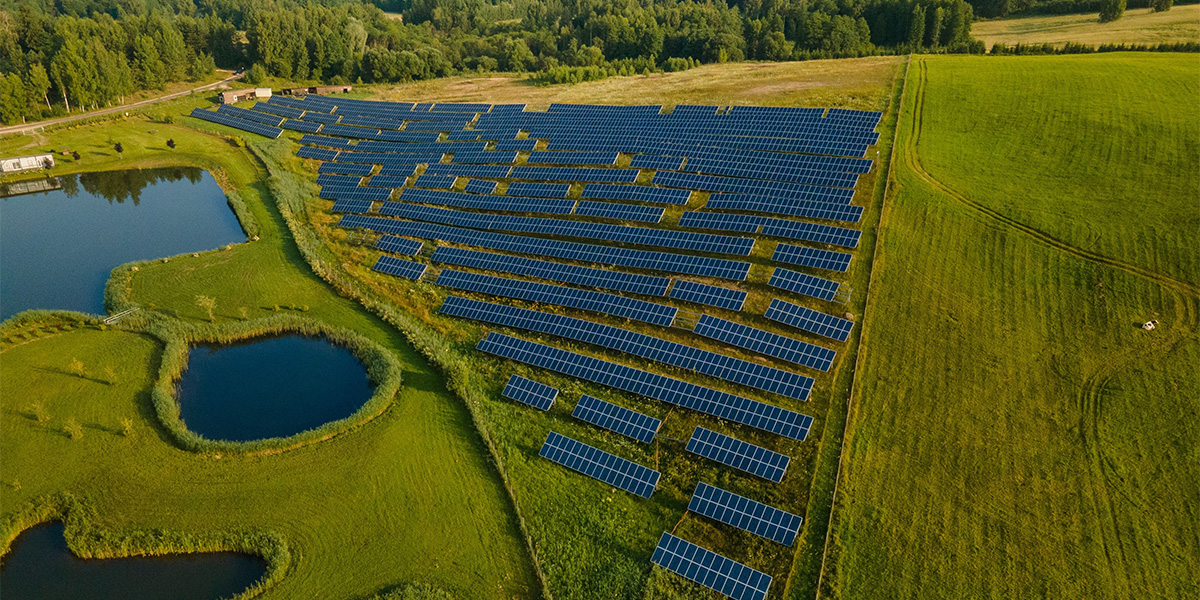
Why Small Solar Energy in Lithuania Is Breaking All Growth Records in 2026
Why Small Solar Energy in Lithuania Is Breaking All Growth Records in 2026
Lithuania's energy landscape has taken an interesting turn. Small-scale solar installations are driving growth that nobody quite saw coming, with the total installed capacity of all producing consumers now reaching approximately 2.2 gigawatts (GW). Nearly 170,000 self-sufficient energy users are scattered throughout the country, and ESO, Lithuania's national electricity distribution system operator, managed to integrate over 53,000 new producing consumers in 2025 alone. Those are impressive numbers by any measure.
The story gets more intriguing when you look at what's actually happening on the ground. Last autumn, around 340 small solar power systems of up to 0.8 kW were registered in Lithuania, signalling a clear shift toward more accessible renewable energy options. These compact systems have a compelling economic proposition – they typically pay for themselves within two to three years, generating annual electricity savings between €100 and €140. Perhaps more striking is the potential scale: experts estimate that nearly 600,000 Lithuanian households could benefit from installing these systems. That suggests we're witnessing the early stages of something much larger.
This surge in small solar energy adoption stands out as one of Lithuania's most significant achievements in the renewable sector. The foundation was laid between 2019 and 2023, when the country channeled nearly €70 million into energy research and development projects. That investment is now paying dividends through an explosion in consumer-level solar installations.
The question worth exploring is why these small solar systems are experiencing such remarkable growth in Lithuania, and what this means for the country's energy future. The answer reveals quite a bit about how smart policy and changing consumer behaviour can create unexpected momentum in the energy transition.
Small Solar Takes Root in Lithuanian Homes
Small residential solar systems have become something of a sensation across Lithuania. What started as a niche interest has evolved into a genuine movement, offering homeowners a surprisingly straightforward entry point into renewable energy production. These compact installations are fundamentally changing how ordinary Lithuanians think about their relationship with energy.
The Appeal of Balcony Solar
The concept is refreshingly simple. Plug-in solar systems, officially legalized in Lithuania in 2023, work exactly as you might expect – plug and play. These systems typically consist of one or two solar panels connected to microinverters that plug directly into standard electrical outlets. Unlike the complex installations that require professional teams and extensive planning, these small systems can be mounted on balconies, facades, terraces, or even outdoor furniture. The beauty lies in the simplicity: hang the panel, secure it properly, and connect it to a power outlet. That's it.
It's rather like the difference between building a garage from scratch and assembling a bookshelf from IKEA. Both serve their purpose, but one is considerably more accessible to the average person.
The 0.8 kW Sweet Spot
There's something quite clever about the 0.8 kW threshold that Lithuania has established. As of mid-2025, the country had registered 661 small solar units with capacity less than 0.8 kW. Vilnius and Kaunas counties are leading the charge with 208 and 153 units respectively. The Energy Ministry considers these systems particularly promising because they've managed to cut through the usual bureaucratic maze – they require no formal grid connection permits, users simply inform the network operator after installation.
The economics make sense too. These compact systems work especially well for households consuming up to 70 kWh monthly, which could potentially benefit approximately 320,000 Lithuanian households. With basic kits starting around €359 and government subsidies reducing costs to about €155, the financial proposition becomes quite compelling. Most systems achieve payback within 1-2 years with subsidies, or 2-4 years without.
Lithuanian Solar Reality Check
Solar panels in Lithuania generate approximately 1000 kWh annually per 1 kW of installed capacity according to long-term observations. This means a typical 0.8 kW balcony system can produce up to 700-800 watts during peak seasons, roughly from spring through early autumn.
That output typically covers the basics – refrigeration, television, lighting. Any excess energy gets fed back into the grid through Lithuania's net metering system, allowing users to retrieve it later (though the national energy regulator does charge a fee for this service).
Perhaps the most encouraging development is how Lithuanian retailers have embraced this trend. Many now offer these systems as complete DIY kits, complete with installation guides and subsidy application instructions. It's a far cry from the days when solar energy felt like something only engineers and environmental enthusiasts could tackle.
What's Driving the Record-Breaking Growth in 2026
The surge in small solar installations across Lithuania didn't happen in a vacuum. Multiple forces have aligned to create conditions that make renewable energy genuinely accessible to ordinary citizens, and understanding these drivers helps explain why 2026 has become such a remarkable year for the sector.
Regulatory Reform That Actually Works
Lithuania's approach to regulatory reform deserves recognition. Since 2023, the country has systematically dismantled bureaucratic barriers that traditionally discouraged small-scale energy production. Owners of systems under 0.8 kW now face a refreshingly simple process – install first, inform the network operator later. This reversal of the traditional permit-first approach has eliminated weeks of waiting time and mountains of paperwork.
The implications extend beyond convenience. Homeowners can now install these systems themselves without certified installers, directly addressing two major barriers: cost and availability of qualified technicians. Remote solar parks have seen similar improvements, with permitting processes shortened from months to just a few weeks. This creates genuine options for apartment dwellers who previously had no path to solar ownership.
Financial Incentives with Real Impact
The current subsidy program covers up to 65% of installation costs for small solar systems, but the real genius lies in how this changes the investment calculus. For many households, payback periods now fall below two years, effectively converting solar energy from a long-term commitment into an immediate savings opportunity. That's a fundamentally different proposition.
Lithuania has also introduced specialized credit lines with preferential interest rates specifically for renewable energy projects. These financial tools, working alongside the subsidy framework, have opened solar access to middle and lower-income families who couldn't previously manage the upfront investment. The policy recognizes that democratizing energy production requires addressing real financial constraints.
Energy Security Meets Environmental Awareness
Recent geopolitical tensions have crystallized something important for Lithuanian households – energy independence isn't just an environmental luxury, it's a practical necessity. Educational campaigns by government agencies and NGOs have raised awareness about how residential solar systems function and their financial benefits, but energy security concerns have provided the emotional urgency that drives actual decision-making.
Environmental consciousness continues to evolve among Lithuanian citizens as well. Recent surveys show environmental considerations ranking among the top three factors when households decide to install solar panels, alongside financial savings and energy independence. This represents a cultural shift in how ordinary people view their role in the energy transition – from passive consumers to active participants in addressing climate challenges.
The convergence of these factors suggests Lithuania's solar boom isn't just a temporary phenomenon driven by generous subsidies, but rather the result of systematic policy design that addresses real barriers to adoption.
Remote Solar Parks Change the Game
Something quite clever is happening in Lithuania's energy space. Consumers are moving away from traditional rooftop installations toward remote solar parks, and this shift tells us a lot about how innovative policy can reshape entire markets.
Lithuania's European First
Lithuania pulled off something remarkable in 2019 when it became the first European country to introduce a digital platform enabling households to purchase or rent portions of remote solar farms. The concept is elegantly simple: consumers buy a segment of a solar installation located elsewhere while receiving the energy through the grid. The government allocated €15 million to support this initiative, offering €323 per kilowatt of installed capacity purchased from solar parks. For consumers, this delivers tangible benefits—approximately €190 annually with a 2kW panel, while reducing CO2 emissions by 37 tons.
It's the kind of policy innovation that makes you wonder why nobody else thought of it first. The approach effectively decouples solar ownership from roof ownership, opening up possibilities that traditional models simply couldn't address.
Opening Doors for Apartment Dwellers
Remote solar parks have solved a persistent problem: how to give apartment residents access to solar energy when they lack suitable installation space. The numbers speak to the success of this approach. As of February 2024, over 34,000 remote generating consumers were connected to Lithuania's grid with a total capacity of 202.7 MW. During the first half of 2023 alone, that number more than doubled.
Lithuania's "virtual net billing" system deserves particular credit here. It effectively extends solar benefits to people who were previously shut out of the renewable energy revolution entirely. That's not just good policy—it's good politics, ensuring that energy transition benefits aren't concentrated among homeowners with suitable roofs.
Getting the Numbers Right
Most Lithuanian households approach solar capacity decisions with a practical mindset. Around 60% of generated electricity gets consumed immediately during daylight hours, with 40% fed back to the grid for later use. Households that can shift more consumption to daylight hours can push this ratio to 70-80%, which reduces storage costs. An average Lithuanian household requires a 2-3 kW system, which produces approximately 1000 kWh annually per 1 kW of installed capacity.
The calculation becomes quite straightforward once you understand these patterns. The beauty of remote solar parks is that they allow consumers to right-size their investment without worrying about roof constraints or installation complications.
Grid Integration Faces Reality Check
The surge in small-scale solar adoption has created an entirely different set of challenges. Lithuania's electrical infrastructure is being tested in ways that weren't anticipated when the country first embraced distributed energy production.
When Success Creates Problems
ESO increasingly restricts new connections where grid capacity simply cannot accommodate additional production. The system faces capacity constraints, bidirectional flow challenges, voltage regulation issues, and stability concerns with high distributed generation penetration. These aren't theoretical problems – they're happening right now in areas with high prosumer concentration. The irony is that success in solar adoption has created the very obstacles that could limit further growth.
Battery Storage Provides the Answer
Lithuania's response has been characteristically ambitious. The country has deployed Europe's largest 200 MW battery system, capable of reacting within one second to disturbances. This system, distributed across four 50 MW battery parks in Vilnius, Šiauliai, Alytus and Utena, provides continuous power for about one hour until other generation sources activate. It's an impressive piece of infrastructure, and it works.
Additionally, the Lithuanian Ministry of Energy now promotes small-scale power plants with battery storage solutions that permit energy autonomy and reduce burden on the public network. This approach tackles the problem at its source – if households can store their own solar production, they place less strain on the grid during peak generation periods.
ESO Steps Up Infrastructure Investment
ESO has committed substantial resources to address these challenges. The organisation plans investments totaling EUR 3.3 billion between 2024 and 2033. These funds support modernising distribution networks through smart grid technologies, strategic infrastructure upgrades, and advanced monitoring systems.
Perhaps more importantly, ESO has taken a pragmatic approach to regulation. The organisation has simultaneously reduced bureaucratic requirements and raised the threshold for simplified plant connections to 1 kilowatt capacity, facilitating further growth of distributed renewable energy resources. It's a recognition that the old rules weren't designed for a world where thousands of households become energy producers.
Looking Forward
Lithuania's solar story has turned out quite differently than anyone expected. What started as a modest push toward renewable energy has become something more interesting – a genuine shift in how ordinary people think about electricity. The numbers speak for themselves, but perhaps more importantly, the psychology has changed.
The success of these small 0.8 kW systems reveals something important about energy transitions. It's not always the grand infrastructure projects that create lasting change, sometimes it's the accessible, practical solutions that people can actually afford and install themselves. There's a lesson here about the power of removing barriers rather than simply adding incentives.
Remote solar parks stand out as perhaps Lithuania's most clever innovation. The idea that apartment dwellers can own a piece of a solar farm located elsewhere and receive the benefits through the grid – that's the kind of creative thinking that other countries should be watching carefully. It's also a reminder that energy access doesn't have to be constrained by physical space limitations.
The grid challenges are real, of course. Nearly 170,000 self-sufficient energy users create pressures that the system wasn't originally designed to handle. ESO's €3.3 billion investment plan between 2024 and 2033 suggests they understand the scale of adaptation required. The 200 MW battery system helps, but it's ultimately just buying time for more fundamental infrastructure changes.
What strikes me most about Lithuania's approach is how they've managed to make solar energy feel normal rather than exotic. The plug-and-play systems, the simplified permitting, the government subsidies that actually make a difference – these aren't particularly sophisticated policy tools, but they work because they address the real barriers people face.
The broader implications extend beyond Lithuania's borders. Other countries grappling with energy transitions might note how financial accessibility and bureaucratic simplicity can accelerate adoption faster than technology improvements alone. Sometimes the breakthrough isn't in the panels themselves, but in making them reachable for average families.
Lithuania has essentially turned solar energy from a long-term investment into a short-term savings strategy. That's not a small accomplishment, and it suggests we're entering a phase where renewable energy adoption could accelerate in ways that current models don't fully capture. The foundation is clearly laid for further expansion – the question now is whether the infrastructure can keep pace with consumer demand.