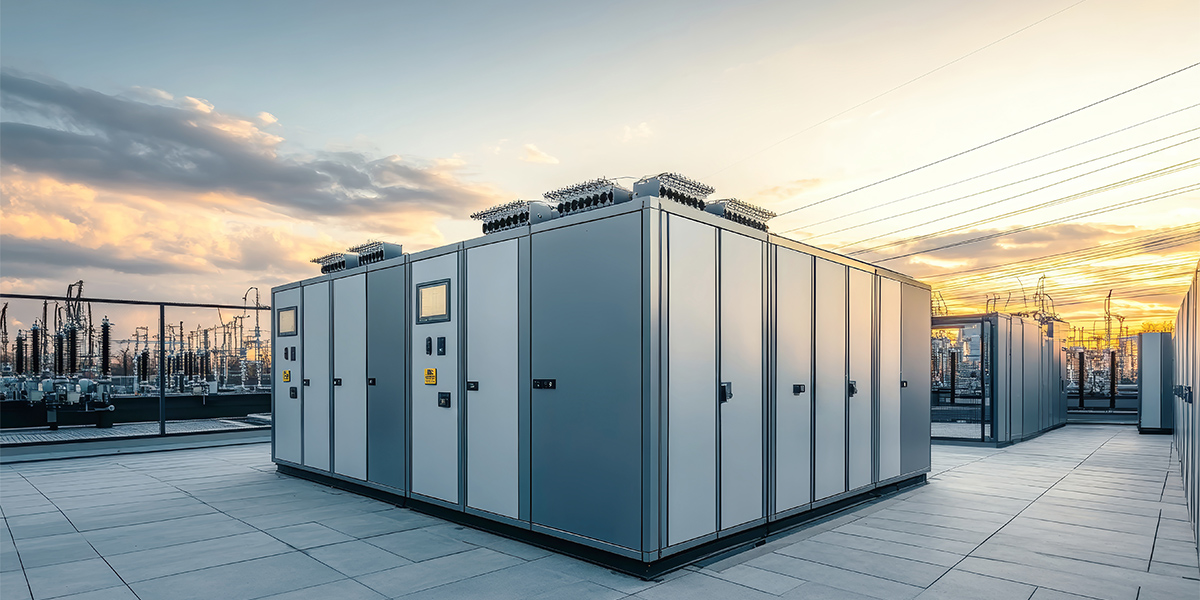
The Hidden Cost of Delayed Energy Storage Solutions in Eastern Europe
The Hidden Cost of Delayed Energy Storage Solutions in Eastern Europe
Energy storage solutions are growing like never before in Central and Eastern Europe. Experts predict a fivefold increase by 2030. We have a long way to go, but we can build on this progress as delays could affect energy independence and climate targets by a lot.
Latest industry reports show Poland leading this change. The country's energy storage capacity will jump from 350 MWh to 4000 MWh by decade's end. Romania and Hungary are close behind with predicted capacity growth to 3750 MWh and 3300 MWh respectively. This quick expansion shows how the region values storage technologies as key parts of energy security and grid stability.
Germany's progress proves the market's strength. The country's grid-connection queue for battery storage has grown beyond 500 GW. Poland has shown its commitment by funding about 172 storage projects. These projects should finish by 2028's end, reaching roughly 3.9 GW / 14.5 GWh.
Big industry players are riding this wave of growth. Huawei will provide its advanced all-scenario, grid-forming energy storage platform to support GPC's storage projects. This is especially important in Poland and Hungary, where GPC has built a large 1.7 GW solar portfolio. The company added 54 MW/216 MWh of battery energy storage system capacity in 2025, bringing its ready-to-build storage pipeline to 392 MW/1.6 GWh.
The time to act is running out, despite these promising signs. Delayed deployment costs go way beyond lost money and could weaken the region's renewable energy shift and economic edge.
The Cost of Missing the 2022–2025 Storage Window
Eastern Europe faces a crucial turning point in energy storage development. The years 2022-2025 present a vital investment window that could lead to major economic setbacks if missed.
Battery storage has become more viable economically. Costs have dropped dramatically - 93% lower than 2010 levels. All the same, current deployment rates suggest global installed capacity will reach only 1.2 terawatts by 2030. This falls 300 gigawatts short of the COP29's 1.5 terawatt target. Eastern Europe needs to speed up its deployment significantly to bridge this gap.
Financial institutions now realize that putting off implementation creates more than missed chances - it leads to real money losses. Projects delayed in the region face higher risks of revenue disruption during transport, building, and setup phases. Chinese manufacturers like EVE Energy and Huawei have already secured major deals to deploy 500 MWh systems in Central and Eastern European markets. Countries that wait too long risk becoming dependent on outside technology providers.
European power markets have introduced 15-minute settlement periods. This change could increase battery storage profits by 14-25% in select markets. Market participants who act quickly can benefit from precise arbitrage chances that become less valuable as markets evolve.
Eastern European countries have a unique window from 2022-2025. They can build their own energy storage capabilities while prices stay favourable and before technology leadership moves further outside the region.
As energy storage projects across Central and Eastern Europe move from ambition to execution, access to specialist talent is becoming a defining success factor. The Green Recruitment Company (TGRC) works exclusively across the energy transition, with a long-standing focus on battery energy storage systems (BESS) at utility scale. We support developers, IPPs, funds, OEMs and EPCs across Germany, Poland, Romania and wider Europe, covering project development, grid & electrical engineering, construction, asset management and commercial leadership. As storage markets accelerate, delays are increasingly driven not just by regulation or grid access, but by shortages of experienced BESS professionals—particularly those with hands-on exposure to grid-forming systems, merchant revenue models and complex connection environments. Bridging this capability gap early is critical to keeping projects on track within the narrowing 2022–2025 delivery window.
Regulatory Bottlenecks and Infrastructure Gaps
Energy storage solutions face major roadblocks due to regulatory uncertainty in Eastern Europe. The market cannot develop quickly because current frameworks don't provide enough support, even though people recognize the benefits of storage. Many countries have poorly regulated storage sectors, which makes investors hesitant without clear market signals for the future.
Romania shows these challenges in its changing regulatory environment. The Romanian Energy Regulatory Authority has made progress by adopting new exemptions for reinjected electricity, after "double taxation" stymied development. The country will implement Order No. 20/2025 in June 2025 to enforce stricter grid connection requirements. This new order targets speculative projects that tie up grid capacity.
Bulgaria struggles with similar issues. The country needs better regulations for commercial and industrial energy storage systems and has weak policies for frequency regulation. New legislative amendments brought grid connection rules for storage facilities, including a grid bond of BGN 50,000 per megawatt of connected capacity. These changes don't go far enough to address the problems.
Grid limitations create even bigger hurdles. Renewable energy projects totaling 1,700 GW sit idle in grid connection queues across Europe. Seven nations lost €7.2 billion worth of renewable electricity to curtailment in 2024. Europe's electrical networks need significant upgrades since 40% of the infrastructure is over 40 years old. Without these improvements, the region might fail to meet its energy security and climate goals.
Strategic Risks for Energy Independence and Climate Goals
Eastern Europe has faced a similar crossroads before. In the 1990s and early 2000s, many countries deferred deep power-system reform in favour of rapid gas adoption, locking in long-term dependencies that only revealed their full cost years later. What appeared at the time as a pragmatic, low-risk bridge solution ultimately constrained energy sovereignty and proved expensive to unwind. Energy storage now occupies a comparable position. Delaying deployment may feel cautious or fiscally prudent in the short term, but history suggests it risks repeating a familiar pattern: short-term stability at the expense of long-term resilience, flexibility and strategic control.
Slow energy storage deployment threatens Eastern Europe's strategic independence. The European Union faces high risks because imported fossil fuels supplying 58% of primary energy needs in 2023 make the region vulnerable to price swings, political pressure, and supply cuts.
This weakness varies by a lot among countries. Malta leads with 96.1% fossil fuel dependency, while Cyprus follows at 89.3%. The situation looks worse as some countries like Bulgaria showed higher fossil fuel dependency (+2.8%) in 2022. This shows the region's unstable position.
Energy storage plays a vital role in security and cutting carbon emissions. Bulgaria's Minister Zhecho Stankov spoke about their new 500 MWh battery project. He stressed how these investments "boost energy security, support market-based operation, and create a sustainable pathway" for traditional energy hubs.
The region must act fast on storage deployment. Delays will lead to continued fossil fuel dependence and put climate goals and energy independence at risk. Europe's utility-scale storage will reach 250 GW by 2034, and regions that wait too long risk falling behind permanently.
Conclusion
Eastern European nations face a crucial decision point about energy storage implementation. Poland, Romania, and Hungary have made promising projections and significant investments. Yet the region must act quickly within the 2022-2025 window. Delayed projects create financial losses beyond simple postponement costs. The region risks greater technological dependence on external providers, as Chinese manufacturers secure major agreements throughout the area.
Multiple countries struggle with regulatory uncertainties. Romania and Bulgaria illustrate these challenges through their evolving frameworks. Their regulations show improvement signs but cannot accelerate market growth. These bottlenecks create serious problems. The aging infrastructure compounds these issues - 40% of Europe's electrical networks exceed 40 years in age. This combination threatens both immediate economic benefits and long-term strategic goals.
The stakes are high when it comes to energy independence. A 58% dependency on imported fossil fuels makes the region vulnerable to price fluctuations and political pressures. Countries that fall behind in storage deployment will likely stay trapped in fossil fuel reliance. They will also miss their climate neutrality targets.
Quick action matters more than endless discussions. Eastern European countries should tackle regulatory barriers head-on. They need to modernize infrastructure faster and build domestic energy storage capabilities while favorable conditions last. Continued delays hide costs that are way beyond the original implementation expenses. These delays put both economic competitiveness and strategic autonomy at risk throughout the region. The right time for action was yesterday - waiting until tomorrow could be too late.
Key Takeaways
Eastern Europe faces a critical window for energy storage deployment that could determine the region's energy future and economic competitiveness.
The 2022-2025 implementation window is closing fast - delays risk missing optimal battery storage economics with costs down 93% since 2010 and favorable market conditions.
Regulatory bottlenecks are stalling progress - unclear grid connection rules in Romania and Bulgaria, plus outdated infrastructure (40% over 40 years old) create investment uncertainty.
Energy independence hangs in the balance - with 58% fossil fuel dependency, delayed storage deployment threatens climate goals and leaves nations vulnerable to external pressures.
First-mover advantage is slipping away - Chinese manufacturers are securing major 500 MWh agreements while European countries hesitate, risking technological dependence.
Hidden costs exceed implementation expenses - beyond financial losses, delays undermine strategic autonomy, climate commitments, and long-term economic competitiveness across the region.
The region's energy storage capacity is projected to grow fivefold by 2030, but only countries acting decisively now will capture the full benefits of this transformation while maintaining control over their energy destiny.
FAQs
Q1. What are the potential consequences of delaying energy storage implementation in Eastern Europe?
Delaying energy storage implementation can lead to increased fossil fuel dependency, missed climate targets, reduced energy independence, and economic disadvantages as countries fall behind in technological advancements.
Q2. How significant is the growth projected for energy storage capacity in Eastern Europe?
Energy storage capacity in Eastern Europe is expected to grow fivefold by 2030, with countries like Poland potentially increasing from 350 MWh to 4000 MWh by the end of the decade.
Q3. What regulatory challenges are hindering energy storage development in the region?
Regulatory challenges include unclear grid connection rules, lack of policies for frequency regulation in commercial and industrial energy storage systems, and outdated grid infrastructure in some countries.
Q4. Why is the 2022-2025 period considered a critical window for energy storage investment?
This period offers optimal conditions due to plummeting battery costs, favourable market dynamics, and the introduction of 15-minute settlement periods in European power markets, which could boost storage profitability.
Q5. How does energy storage contribute to energy independence in Eastern Europe?
Energy storage solutions enhance energy security by reducing reliance on imported fossil fuels, supporting the integration of renewable energy sources, and providing grid stability, thus strengthening overall energy independence.